
















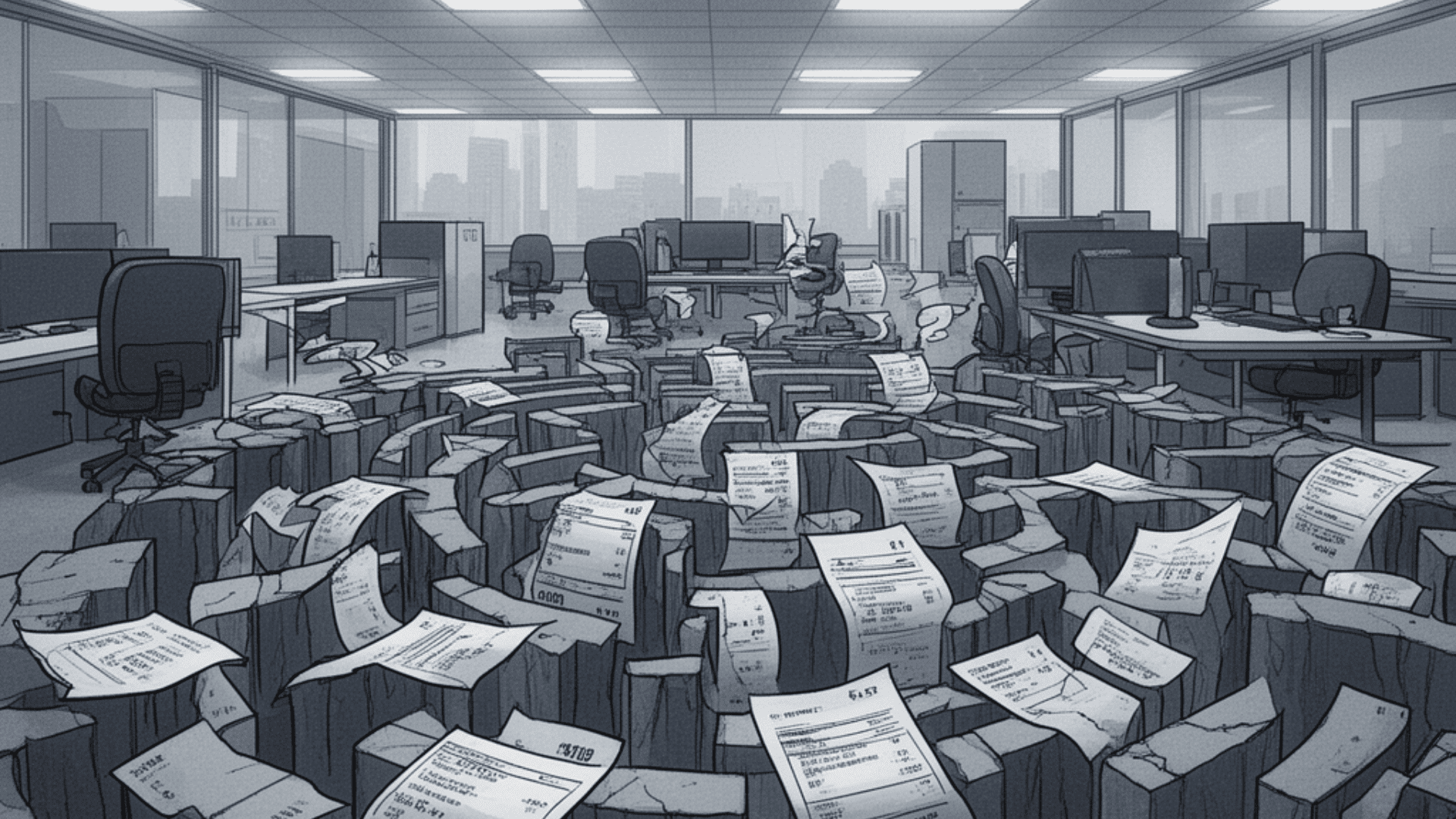
On paper, IT support often seems like a pure expense. An invoice that recurs monthly, a help desk that is “there when needed,” and that seems to be the end of the matter. Until things go wrong. Then it suddenly turns out that bad IT support has no visible price tag, but a silent bill that keeps piling up every day. Not just in euros, but in lost time, frustration, missed opportunities and increased risk.
What makes these costs so insidious is that they are rarely recognized as “IT costs.” They do not appear neatly lined up in accounting records. They creep in through slow systems, half-working solutions and problems that keep recurring without ever really being resolved.
When IT problems become “normal”
In many SMEs, a dangerous habit develops. Employees wait a little longer for their computers to boot up. Files open slowly, Teams occasionally falters, and emails sometimes arrive with delays. No one raises the alarm anymore, because “that’s just the way IT is.” That’s just where the real loss begins.
Every little delay seems harmless, but multiply it by the number of employees and work days, and you get a structural productivity leak. People work slower not because they don’t want to, but because their tools are working against them. Poor IT support doesn’t recognize this pattern, or worse, considers it “not a priority.”
Putting out fires costs more than preventing them
Another hidden cost block is in the way problems are addressed. Reactive IT support resolves incidents, but rarely looks beyond the symptom. A server is rebooted, a mailbox restored, a laptop reset. It works again, for now. Until the same problem reoccurs a few weeks later.
This continuous firefighting seems cheap because it is spread over separate interventions, but in reality you are paying for the same problem over and over again. Without structural analysis, monitoring and follow-up, causes persist. Good IT support prevents problems before they are felt. Bad support bills them afterwards, over and over again.
The invisible pressure on your people
IT problems also have a human cost that is often underestimated. Employees who bump into technical obstacles on a daily basis lose focus and motivation. They start looking for workarounds, make mistakes or postpone tasks. Not out of unwillingness, but out of self-protection. No one likes to work in an environment that constantly works against them.
On top of that comes the mental strain on key people in the company. Often there is one person who “knows something about IT” and constantly intervenes. That person unintentionally becomes an internal help desk, affecting his or her core tasks. Poor IT support externalizes its own shortcomings to your team.
Security risks that become apparent only after the damage is done
Perhaps the most expensive hidden cost is increased security risk. Poor IT support works reactively, including in terms of security. Updates are delayed, permissions structures grow unchecked, and backups are assumed to work, without regular monitoring.
As long as nothing happens, everything seems fine. Until one phishing email suffices, or one wrong click. Then it suddenly becomes apparent that the real cost is not in the incident itself, but in downtime, data loss, reputational damage and stress. Preventive security often feels “redundant” until it is missing. your team.
Missed growth and strategic downtime
IT today is no longer a supporting peripheral, but a foundation under your operation. Poor IT support thinks in tickets and hours, not in business goals. New tools are not implemented correctly, automation lags, and digital improvements are pushed forward “until later.”
That later rarely comes. Meanwhile, competitors do grow, because their IT grows along with their ambitions. You don’t see the cost of this immediately, but it is in missed efficiency, slower decisions and an organization that falls behind structurally.
The real price of "cheap"
Many companies only realize what bad IT support costs when they switch. Suddenly it becomes clear how much time was wasted, how many risks were taken unnecessarily and how much frustration was considered normal. The irony is that cheap, minimal support often comes out more expensive than a thoughtful, proactive approach.
Good IT support quietly makes itself invisible. Systems work, problems stay out, and employees can focus on their jobs. Bad support is noisy, disruptive and constant. Not always with major incidents, but with small blockages that add up to a heavy toll.
If IT is especially noticeable when things go wrong, you are probably already paying hidden costs. When the same problems recur, there is no structural solution. And when employees find workarounds normal, that’s an alarm signal. Healthy IT doesn’t feel like a brake, but a natural support for your business.
Frequently Asked Questions
When problems keep recurring, are slow to resolve, or when IT only responds when something is broken. When employees experience structural delays, it is not a coincidence but a signal.
Yes. Lost time, frustration, inefficient work and missed growth opportunities don’t show up on an invoice, but on an annual basis often cost more than the IT support itself.
Not necessarily, but often. Low prices usually mean reactive support without prevention, monitoring or strategic insight. That shifts the cost to downtime and risk.
If new tools are introduced with difficulty, automation fails, and IT feels mostly “inconvenient” rather than supportive, then IT works against rather than with you.
Proactive IT support that looks ahead: preventing problems, optimizing systems and aligning IT with your business goals rather than just fixing tickets.