

















Many SMEs sign an IT support contract with a simple idea in mind:
“If something goes wrong, they’ll fix it.”
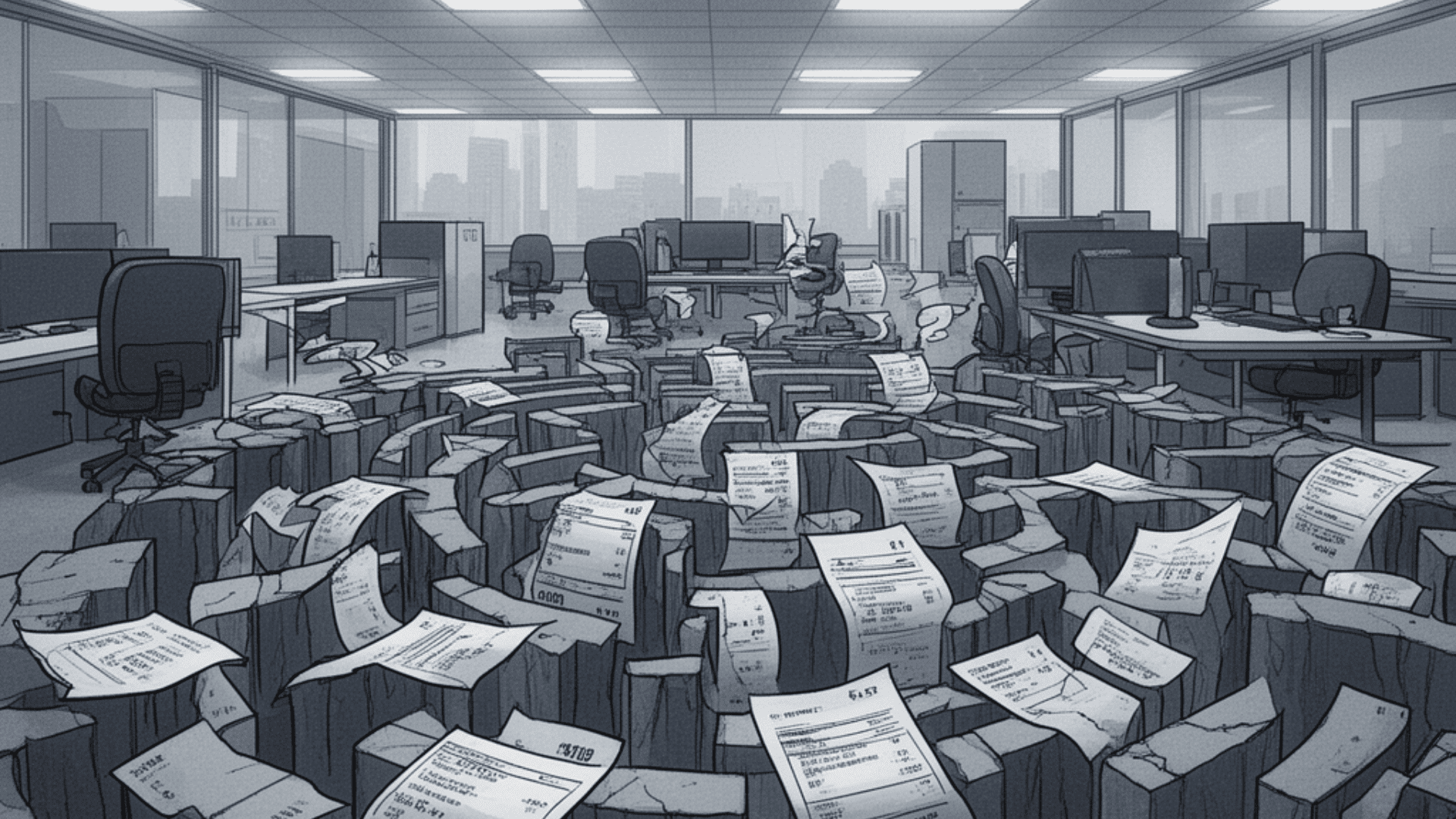
It sounds logical, but this is where it often goes wrong. Because an IT support contract is not all-risk insurance, not an unlimited helpline and certainly not a guarantee that problems will disappear by themselves. Yet in practice we find that expectations and reality are rarely fully aligned.
Time to get that straightened out.
An IT support contract is not an all-in-one solution
A good IT support contract describes who is responsible for what. It defines what is covered by support, what is not, how quickly it is responded to and within what limits.
What it doesn’t do?
It compensates for no years of overdue IT policies, no uncontrolled growth and no proliferation of devices, accounts and tools.
Those who expect this will come out disappointed sooner or later.
What does an IT support contract typically include?
Although contracts vary by provider, we usually see the same building blocks recurring among professional IT partners.
Operational Support
This is the core: help with day-to-day IT problems. Think user questions, problems with email, network outages, Microsoft 365 issues or workstations not functioning as expected.
Monitoring and basic prevention
Many contracts include monitoring of servers, backups and critical systems. Not to predict everything, but to detect more quickly when something threatens to go wrong.
SLA Agreements
A Service Level Agreement defines how quickly responses are provided. Note that response time is different from resolution time. That distinction is often misunderstood.
Maintenance and updates
Patch management, security updates and basic monitoring of the environment are usually part of the contract, as long as the environment is manageable.
What is usually not included (but is often expected)?
This is where the rub lies with many SMEs.
Strategic IT choices are not a standard part of support. Nor is structural rebuilding of a chaotic IT environment automatically part of the contract. Migrations, restructurings, security audits or compliance projects are separate processes.
Also, user errors arising from a lack of agreements or training often fall outside “normal” support. The contract catches the symptoms, not the cause.
The difference between support and mature IT management
An IT support contract only really works well when it fits within a broader vision of IT. That’s where IT maturity makes all the difference.
In a mature IT environment:
- roles and responsibilities are clear
- there are agreements around use, security and access
- Is IT aligned with business goals
- is supported by structure, not improvisation
Without that foundation, IT support continues to put out fires.
Why transparency is more important than "all included"
SMEs often ask, “Why isn’t this in our contract?“
The honest answer: because a good IT contract dares to set boundaries.
A transparent contract says not only what will happen, but also what won’t. This protects both parties and prevents frustration, discussions and unexpected bills.
More than that, it forces companies to think about their IT maturity instead of parking everything with the IT partner.
IT support as collaboration, not a safety net
The best IT support contracts are not a stopgap, but a collaborative model. They work best when IT is seen as a shared responsibility between company and partner.
Those who understand this get more out of support, pay less in the long run and build a more stable IT environment.
Practical takeaways for SMEs
- Read your IT support contract as if it were a partnership agreement, not an insurance policy
- Ask explicitly what is not included
- Check that SLAs match your business reality
- Evaluate whether your IT environment is sufficiently structured for support to work efficiently
- Use support as leverage to grow, not hide chaos
Do you doubt whether your IT support contract today really suits the maturity of your company?
Then it’s time to look broader than support alone.
Discover how to move from reactive IT to a forward-looking approach on our pillar page “When is your IT mature?” That page helps you assess where you are today and what steps are needed to make IT an asset again instead of a brake.
Frequently Asked Questions
No, but without a contract, IT is often purely reactive and unpredictable in cost and quality.
Support focuses on troubleshooting, managed services on structurally managing and improving.
Because structural improvements, projects and strategic choices require customization.
If IT is mostly putting out fires and making little progress, revision is appropriate.