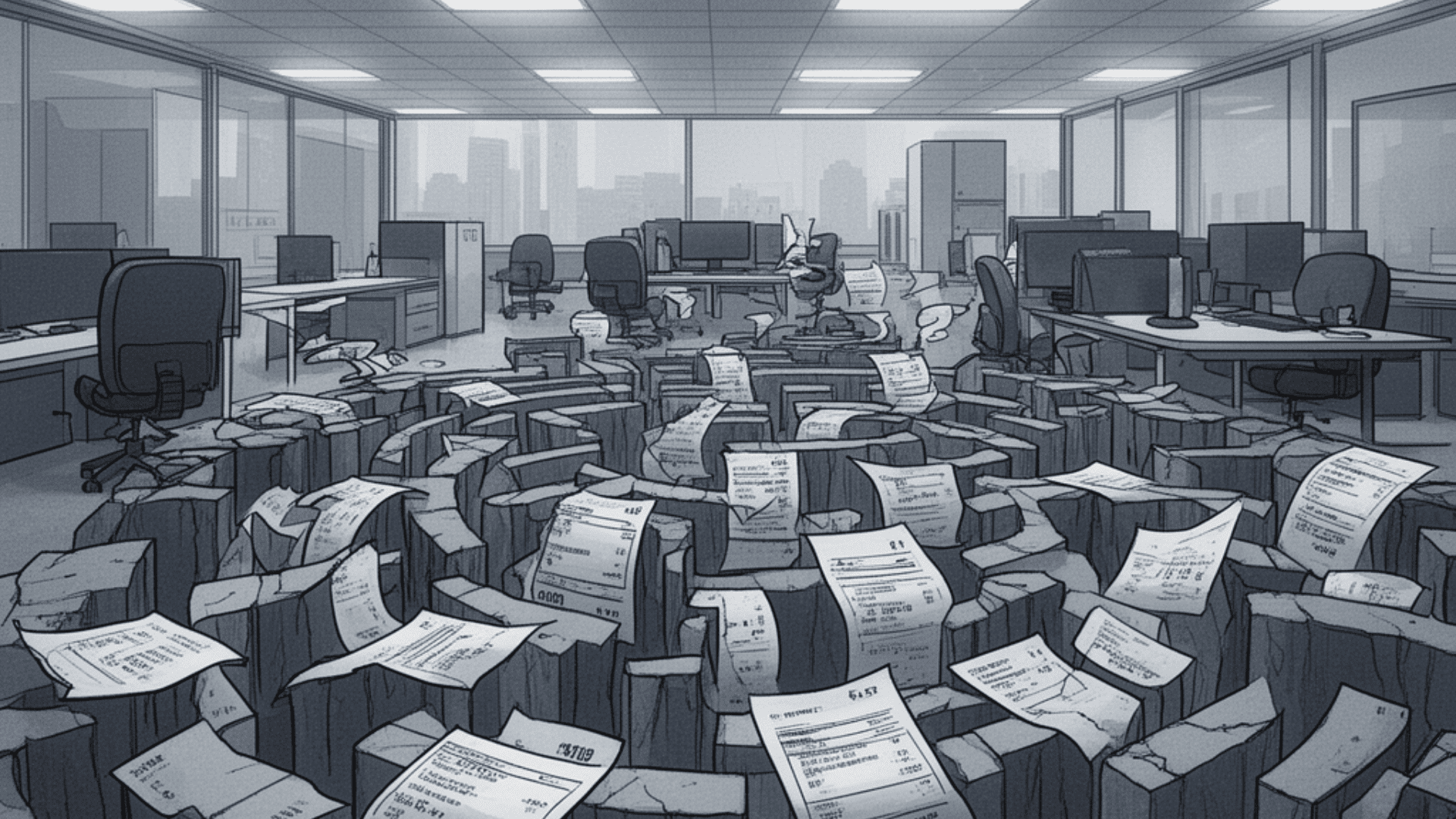

















It rarely begins with a major disaster. No all-out crash, no headlines, no panic. It starts small. An employee saying his computer is “a little slow again.” A printer that “occasionally” doesn’t work. A Teams meeting that starts again five minutes late because someone can’t get their microphone to work. No one makes an issue of it. It just comes with the territory.
And that’s exactly where the problem lies.
IT support that falls short stands out not because of what goes wrong, but because of what is considered normal. Problems become part of the workday. Frustration creeps in. Productivity leaks away in small bits. And no one really does the math anymore.
Many companies get stuck in that phase for too long. Because everything is still just working. Because they think it’s the same everywhere. Because IT “just costs money”. Until the feeling arises that IT is no longer a support, but a brake.
At that point, the question is not whether your IT support is failing, but for how long.
What we often see in practice is that IT support is reduced to reacting. Someone calls, logs in, the problem is temporarily fixed and everyone moves on. On paper, that seems efficient. In reality, it’s symptom control. No one asks why the same problem recurs every month. No one looks at patterns. No one takes ownership of the whole thing.
Good IT support prevents problems from happening in the first place. Bad IT support solves them over and over again.
Added to that is something else: communication. Or rather, the lack of it. “It is resolved” is not an explanation. It is an endpoint without context. For a case manager or team leader, that means: no insight, no grip and no idea where the risks are. You don’t know if this was an exception or a harbinger of something bigger. You only know that you were once again dependent.
When IT support falls short, knowledge stays on one side. You get answers, but no overview. Solutions, but no direction.
That lack of direction often translates into workplace behavior. Employees begin seeking solutions on their own. Files are sent via private email. Free tools pop up. Cloud accounts are created without consultation. Not because people are reckless, but because they want to get ahead. IT is perceived as an obstacle rather than a tool.
This is when IT becomes not only inefficient, but also insecure. And yet it is often ignored because “it just grew that way.”
Another clear signal is how you look at IT at the strategic level. If IT is only discussed when something breaks or an invoice comes in, then something fundamental is missing. IT should be an extension of your business operations. It should evolve with growth, working from home, new regulations, security requirements and digitization.
When no one is talking to you about where your IT should go, you are not in a partnership, you are in a contingency.
The dangerous thing about all this is that the damage rarely shows up all at once. It’s in lost minutes, avoided improvements, delayed decisions and missed opportunities. Everything works just enough to get on with it, but never well enough to really move forward.
And that is precisely what makes IT support that falls short so insidious.
Therefore, the right question is not, “Are we having problems today?”
The right question is, “Is our IT helping our business move forward, or are we unknowingly keeping ourselves small?”
If you do not have a convincing answer to that, that is not a failure. It is a signal. And signals are there to be taken seriously, not ignored.
Frequently Asked Questions
When problems become normal, support mostly reacts and no one monitors the bigger picture.
Yes. Especially when IT is “added” or has grown historically for years without commemoration.
No. Understanding and structure come before new tools or investments.
By having your IT looked at objectively: technically, organizationally and strategically.
Examining how mature your IT is today and where you are unnecessarily losing time, money and risk.